Some 15– 20 years ago, our bank started charging us on our cash deposits.
When we objected, the bank said:
“You bring cash, we count it and deploy manpower, and then the next morning you withdraw it.”
His simple argument was that the bank was working as a currency- counting company,
employing labour and gaining nothing.
The same is the situation with UPI and MDR.
UPI, which started in 2016, has basically grown like algae by 2026.
The chart below shows this:
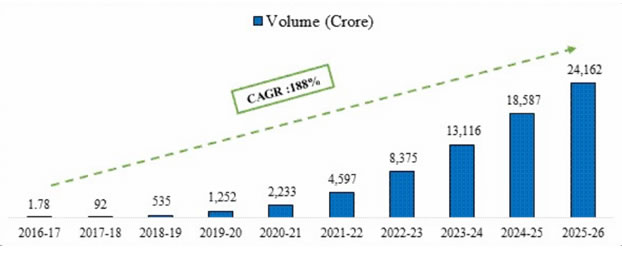
In the first year, total transactions were 50,000/ day.
Today we are doing 27,00,00,000 transactions/ day.
UPI was expected to be distant/ doomed to fail by both the opposition and the ruling political
parties of India.
But instead, UPI killed:
1. ATMs
2. Credit/ debit cards
3. Online banking
4. Bank strikes
5. Bank holidays
It’s smooth and flawless, 24×7, 365 days a year.
The chart below shows the monthly growth of UPI from 2016 to 2026.
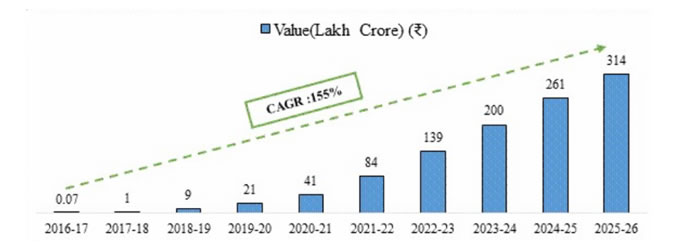
The average per day was 2,000 lakh.
Today it is 3,00,00,000 lakh/ day.
The sheer number and value of transactions have grown large in the last 10 years.
The banking system is under huge pressure to run flawlessly.
MDR is not new; it has been in the banking system for many decades in some form or the other:
1. Cash handling charges
2. DD/ banker’s cheque charges
3. Bank account maintenance charges
4. MDR on debit/ credit cards
It has been part of the system for many years, so why is there so much hue and cry?
If we study the government’s implications, it’s a bit complex.
We will consider only two of the government’s UPI rules:
1. P2P Nil: no charges on any amount transferred from one person to another.
2. P2M: a maximum of ₹300 on a single purchase of ₹75,000 or above.
There are many more exemptions on fuel, rent, insurance and OTT.
Let’s discuss only these two.
1. Any amount transferred to any person, known or unknown, will attract zero charges.
So the major concern of the common person is taken care of.
Transfer to Mummy, Papa, Chacha, a friend… anyone, and you attract zero charges.
2. Any purchase above ₹2,000 from a vendor will attract a maximum of ₹300 on purchases
of ₹75,000 or above.
I believe any vendor will be happy to give a 2% CD on any purchase of ₹75,000, which is about
₹1,500.
If anybody is making a purchase of ₹75,000 or above, I would be happy to absorb ₹300.
The chart below provides a breakup volume- wise and amount- wise, which is very interesting.
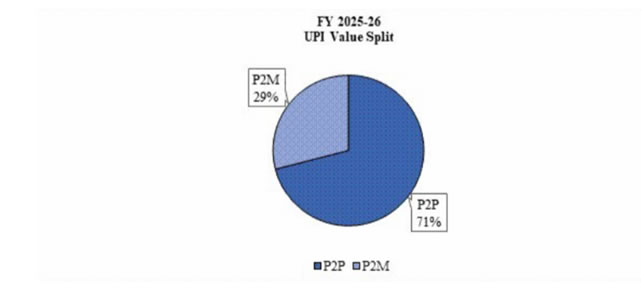
71% of transactions are free.
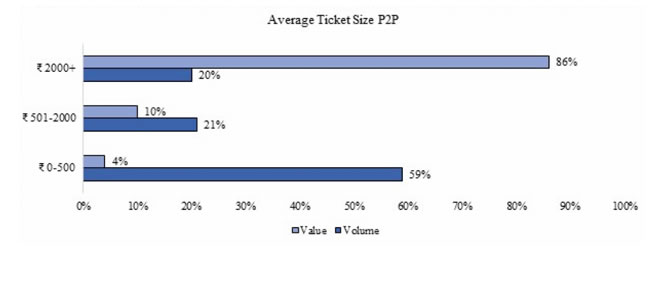
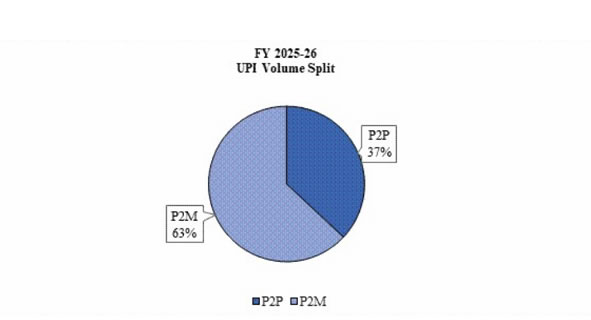
Most of the volume in P2M is also free, though it represents 63%
Only 4% of total UPI transactions are above ₹2,000, but most interestingly, this 4% of volume
accounts for about 67– 70% of the high value.
Now, why does the government want to introduce a charge? Basically, the banks want money to
handle the surge in UPI volume.
The government introduced it with zero fees in 2016 to promote it.
The government promoted/ subsidised it.
The government had no idea then that it would make a hole of ₹20,000 crore/ year in the
exchequer to:
1. Maintain data
2. Manage cyber threats
3. There are only two players, both foreign (Google Pay, PhonePe).
We really need a home- grown player, we need funds, and it will not affect 90% of people.
The government should have explained UPI/ MDR to the common people in the common man’s
language, so that the companies that will be affected by this cannot hold the government
hostage over such policies.